
December 16, 2025
While the world continues to reel from the impact of multiple armed conflicts, peace efforts—particularly in Ukraine—remain elusive. It is difficult to comprehend that, after centuries of historical lessons on the futility and devastation of war, Europe once again finds itself on the brink of calamity.
Nonetheless, human beings possess an enduring capacity to hope for a future in which conflicts are resolved through peaceful means. Some argue that education and culture stand in opposition to the dynamics of war. Others attempt to justify war in the name of higher values—values that are ultimately contradicted and invalidated by violent means. (1)
Contemporary peace initiatives based on deterrents and force adopt a reductionistic view of the human person. They focus primarily on somatic and psychological dimensions of power and drives. They neglect the spiritual dimension of freedom and responsibility—yet it is precisely in the dimension of the spirit that human beings confront the question of meaning and life’s challenges freely, guided by universal and fundamental values such as the Hippocratic principle to “do no harm.”
From a meaning‑oriented perspective, any authentic peace process must integrate the dimension of the spirit and the exercise of sound reasoning. Good argumentation can overcome impediments to peace and challenge the belief that war is the only viable option. Numerous non‑violent responses exist for addressing conflict, but recognizing and acting on them requires a reflective stance and a humanistic approach.
The use of force has often been justified to impose order and to uphold the rule of law. Such force must remain proportionate to prevent further injustice.
Scholars have argued that war represents the failure of reason and justice. (1) This failure has been evident in past colonial enterprises shaped by Eurocentric assumptions of cultural superiority, which undermined mutual respect and the possibility of dialogue among equal partners.
Truth and reconciliation processes around the world have demonstrated that victims of violence must be heard and that societies must work to heal historical wounds, so that reconciliation—though difficult—may be made possible. (2, 3)
The late Pope Francis dedicated the Jubilee Year of 2025 to the theme, “Pilgrims of Hope.” (4) Numerous events in Rome have sought to cultivate hope for a world in which conflicts and injustices are addressed with an awareness of the limitations of force in achieving justice and peace. (5, 6)
In the book, Horizons of Hope, a group of authors explored hope from a meaning-oriented and non-reductionistic perspective. This book followed an earlier publication, Basic Trust, which examined the foundational role of trust in human relationships. Together, these works establish a conceptual link between trust, hope, and peace. (7, 8)
The article “Ambassadors of Hope” presented the four keys proposed by Pope Francis for diplomacy: truth, forgiveness, freedom, and justice. These keys appeal to the spiritual dimension of the person and encourage responses to conflict that combine proportionate force with peaceful means. (9)
While questions remain—such as how to discern truth, how forgiveness relate to justice, how freedom can be exercised responsibly, and how justice should be implemented—these very questions help to demonstrate that war lacks meaning, particularly when innocent people suffer and die, and we must work toward a just peace.
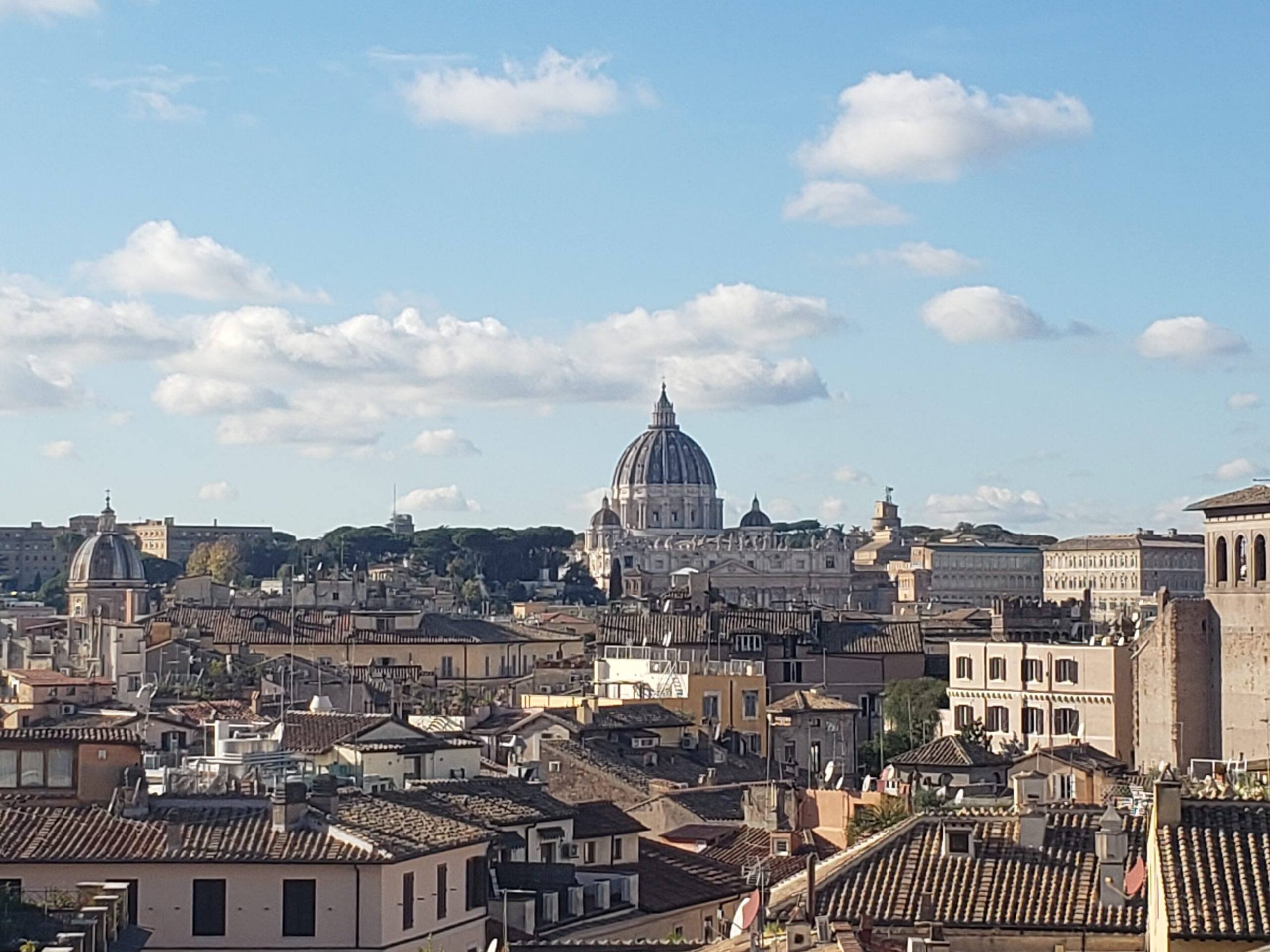
From the 14th to 20th of November 2025, the author travelled to Rome as a “Pilgrim of Hope.” He entered the Holy Door of the Jubilee and attended Mass at St. Peter’s Basilica with Pope Leo XIV during the IX World Day for the Poor. On this occasion, Pope Leo XIV emphasized a message of hope for the poor of the world. (10,11,12, 13)
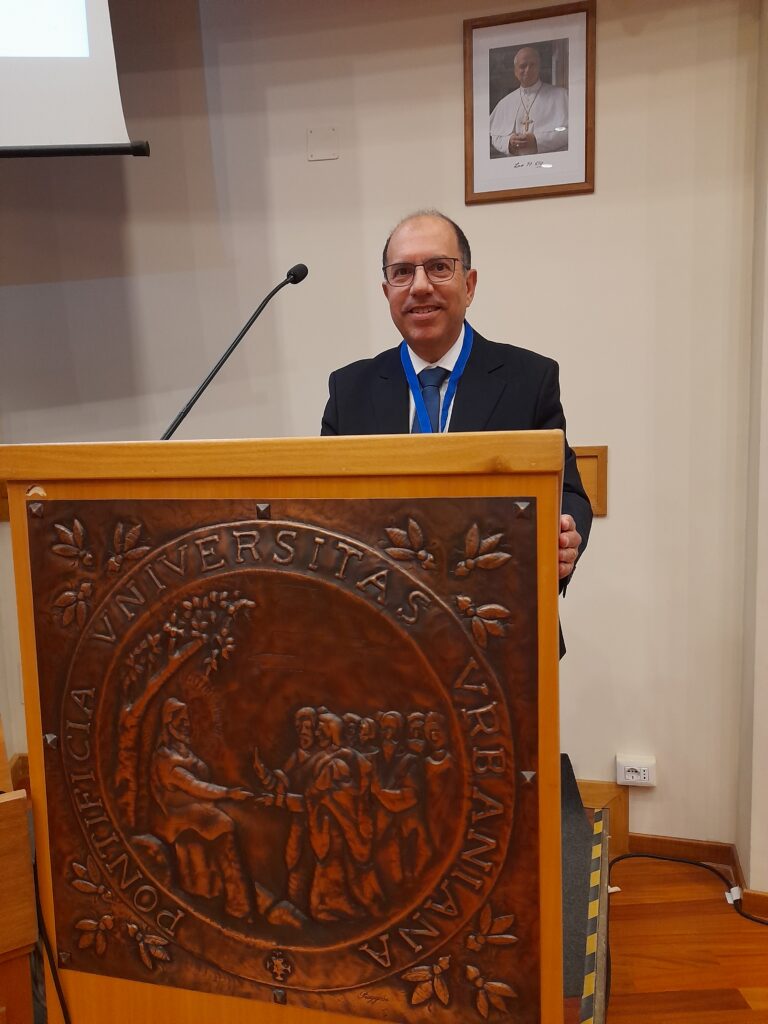
In this context, on November 17th, the author held a presentation at the X International Scholas Chairs conference organized by Scholas Occurrentes [University of Meaning] at the Pontifical Urban University. (14, 15, 16) He shared an educational experience with Ukrainian counsellors and psychologists who are helping fellow Ukrainians alleviate suffering through meaning‑centered interventions [Viktor Frankl’s logotherapy]. (17)
This presentation intended to give voice to innocent people who suffer because of war and to illustrate how it is possible for human beings to console each other in times of war. The presentation also proposed a new paradigm for cultural diplomacy and peace efforts—one that integrates the three dimensions of the person: body, mind, and spirit.
The human dimension of spirit with its free will allows us to make free decisions that are conditioned but not determined. (18) These decisions, in harmony with universal values, such as the dignity of the person and the value of human life, are necessary for peace as they are for love, joy, hope, and trust.
Following this presentation, on November 19th, the author attended the Wednesday General Audience with Pope Leo XIV at St. Peter’s Square and was received at the Centro Pro Unione at the Palazzo Pamphili in Piazza Navona.
In his address at the General Audience, the Pope reflected on the meaning of tears—a sense of loss of value that seems absent when destruction prevails—and prayed: “May the Spirit give us the ability to listen to the voice of those who have no voice.” (19)
These words offer a profound ideal for anyone seeking to rebuild trust, foster hope, and contribute to peace. We can advance this mission by:
- Changing how we think, speak, and write; refraining in our communications from referring to war as the only viable option, when there are alternatives.
- Moving beyond power and emotion; refusing to justify war as meaningful when it is not.
- Giving voice to the oppressed and avoiding the repetition of past colonial patterns.
- Treating one another with the dignity we all deserve.
A just peace arises from commitment to these choices, not only from force or deterrence, which erode trust rather than build it. Those who speak only in terms of force reduce the human person and deceive themselves about what is meaningful by ignoring the human dimension of the spirit. They deny the objective reality and truth that we may never fully grasp yet must continually strive toward if we are to work together as one humanity.
References:
- Schuarcz, G., Ed. (1935) Pro-Paz. Barcelona: Cultura Moderna en Europa.
- National Center for Truth and Reconciliation. Truth and Reconciliation Commission of Canada. Retrieved from: https://nctr.ca/about/history-of-the-trc/truth-and-reconciliation-commission-of-canada/
- Marshall, E. & Marshall, M. (2021). Logotherapy and Existential Analysis for the Management of Moral Injury. Ottawa, ON: Ottawa Institute of Logotherapy.
- Pope Francis (2021). Spes non Confundit. Bull of Indiction of the Ordinary Jubilee of the Year 2025. Retrieved from: https://www.vatican.va/content/francesco/en/bulls/documents/20240509_spes-non-confundit_bolla-giubileo2025.html
- Vatican News (2025). Pope Leo XIV: Cultural diplomacy can build bridges and overcome prejudices. December 11, 2025. Retrieved from: https://www.vaticannews.va/en/pope/news/2025-12/pope-leo-xiv-christian-archaeology-culture-peace-ecumenism.html
- Vatican News (2025). Affinati e il libro sui grandi educatori, de Mendonça: “Un manifesto di speranza.” November 1, 2025. Retrieved from: https://www.vaticannews.va/it/vaticano/news/2025-10/eraldo-affinati-tolentino-mendonca-testa-cuore-mani-libro.html
- Marshall, M. & Marshall, E., Eds. (2022). Basic Trust: The Wellspring of Meaningful Living. Ottawa, ON: Ottawa Institute of Logotherapy.
- Marshall, M. & Marshall, E., Eds. (2024). Horizons of Hope: Upholding Agency in Meaning-Centered Psychotherapy. Ottawa, ON: Ottawa Institute of Logotherapy
- Marshall, M. & Marshall, E. (2025). Ambassadors of Hope: Four Keys from the Perspective of Viktor E. Frankl’s Logotherapy and Existential Analysis. Retrieved from: https://logotherapy.ca/2025/06/02/ambassadors-of-hope/
- Pope Leo XIV (2025). Apostolice Exhortación: Delixi Te. On Love for the Poor. October 4, 2025. Retrieved from: https://www.vatican.va/content/leo-xiv/en/apost_exhortations/documents/20251004-dilexi-te.html
- Pope Leo XIV (2025). Message of the Holy Father for the IX World Day of the Poor. Retrieved from: https://www.vatican.va/content/leo-xiv/en/messages/poor/documents/20250613-messaggio-giornata-poveri.html
- Pope Leo XIV (2025). Pope inaugurates San Martino Outpatient Center at St. Peter’s Square. November 14, 2025. Retrieved from: https://www.vaticannews.va/en/pope/news/2025-11/pope-to-inaugurate-san-martino-outpatient-center-at-st-peters.html
- Pope Leo XIV (2025). Homily. Holy Mass. IX World Day of the Poor, Jubilee of the Poor. St Pere’s Basilica. November 16, 2025. Retrieved from: https://www.vatican.va/content/leo-xiv/en/homilies/2025/documents/20251116-messa-giornata-poveri.html
- Vatican News (2025). Scholas Occurrentes, a Roma il Congresso delle Cattedre dedicato all’IA. Retrieved from: https://www.vaticannews.va/it/vaticano/news/2025-11/scholas-occurrentes-congresso-internazionale-cattedre.html
- Scholas Occurrentes [University of Meaning]. Scholas Chairs. Retrieved from: https://scholasoccurrentes.org/en/catedras/
- Vatican Press Office (2023). The Vatican Becomes the First State to Establish a Public University in Response to the Global Crisis of Meaning. Retrieved from: https://press.vatican.va/content/salastampa/en/info/2023/09/26/230926a.html
- Marshall E. & Marshall M. (2025) Wholesome: The Power of the Human Spirit. Ottawa, On: Ottawa Institute of Logotherapy.
- Marshall, E. (2017). Freedom of Will in Relationships. The International Forum for Logotherapy, 40 (2), 87-96.
- Pope Leo XIV (2025) General Audience St. Peter’s Square. Wednesday, November 19, 2025. Retrieved from: https://www.vatican.va/content/leo-xiv/en/audiences/2025/documents/20251119-udienza-generale.html