
Faith, Human Dignity, and the Communal Journey of Immigrant Integration in Tenerife
June 12, 2026
A Pilgrim’s Return
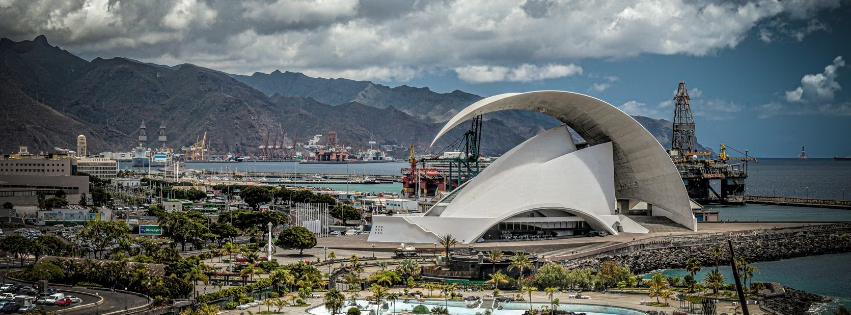
There is a unique kind of reflection that awakens when you return to the soil where your life first began. On June 12, 2026, I travelled from Ottawa back across the Atlantic to Santa Cruz de Tenerife—my birthplace—to witness the historic pastoral visit of Pope Leo XIV (1).
As someone who left Tenerife for England in 1997 and later settled in Canada in 2004, immigration is not an abstract concept for me. It is the architecture of my life. In Perpetuum Mobile: A Personal Global Concern (2), Maria and I described migration as a continuous movement of the human person, echoing the book’s opening definition:
“Perpetuum is ‘always,’ and mobile is ‘movement’—the journey of a person through life.” (Perpetuum Mobile, Ch. I)
This movement is not only geographical. It is existential. It is the ongoing development of identity, conscience, and meaning, a theme deeply rooted in Viktor Frankl’s logotherapy (3).
Standing once again on the island where my ancestors defended our shores, listening to Pope Leo XIV speak about the human dignity of migrants (4, 5), felt like every thread of my personal, professional, and spiritual journey had converged into a single moment.
Migration as Perpetuum Mobile: The Existential Dimension
In Perpetuum Mobile, we wrote that migration is not merely relocation—it is a transformation of the self. Chapter I describes how modern migration often occurs “with limited support,” leading to psychological vulnerability, identity disruption, and existential vacuum (Perpetuum Mobile, Ch. I, pp. 11–12).
This aligns profoundly with what I witnessed in Tenerife.
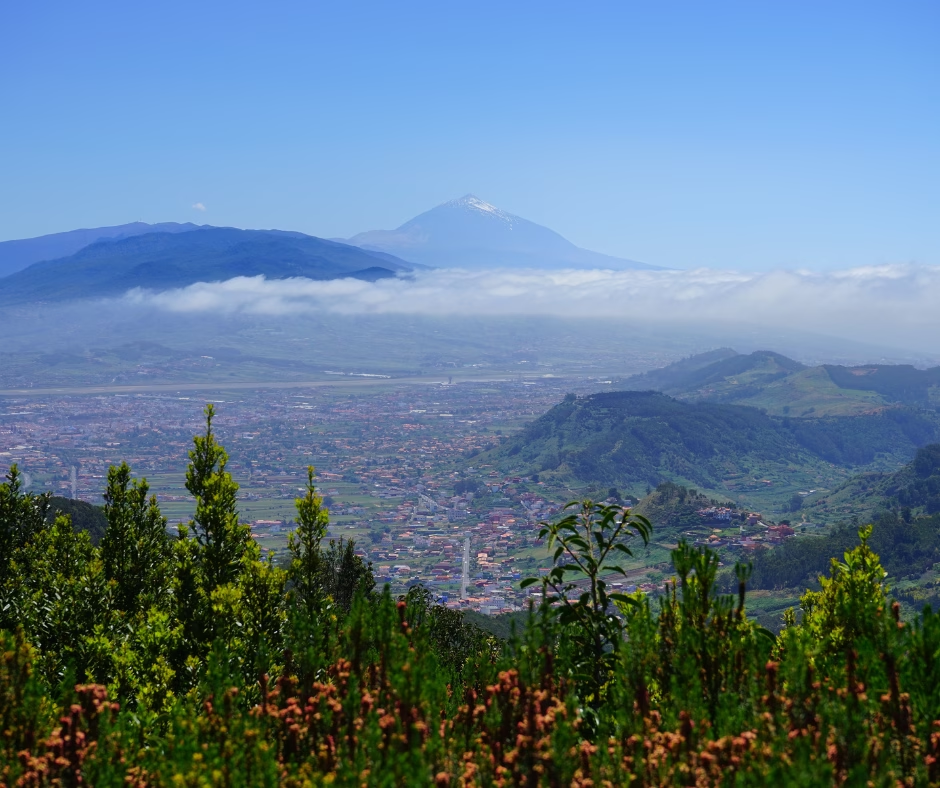
The Canary Islands have become a critical—yet perilous—crossroads on the Atlantic maritime route (7). Thousands of migrants risk everything to reach these shores in search of safety and hope. Against this backdrop, and following the 200th anniversary of the Diocese of Tenerife [2019] (6), Pope Leo XIV arrived with a message that resonated far beyond the archipelago: every immigrant possesses an inherent human dignity that no border or hardship can erase (1).
1. Las Raíces Migration Center: Roots, Identity, and the Existential Vacuum
At the Las Raíces Immigration Center, the Pope reflected on the sacredness of roots and the family of origin (4).
In Perpetuum Mobile, Chapter III describes how immigrants often experience a loss of previous identity, leading to an “inner emptiness” or existential vacuum (Perpetuum Mobile, Ch. III, p. 22). Frankl defined this vacuum as the absence of meaning, a condition that can easily emerge during acculturation (3).
The Pope’s message echoed this precisely: remembering one’s roots is essential for preserving human dignity. But the book reminds us that roots alone are not enough. Immigrants need community support to rebuild identity in new soil.
2. Plaza del Cristo de La Laguna: Community Support as the Engine of Integration
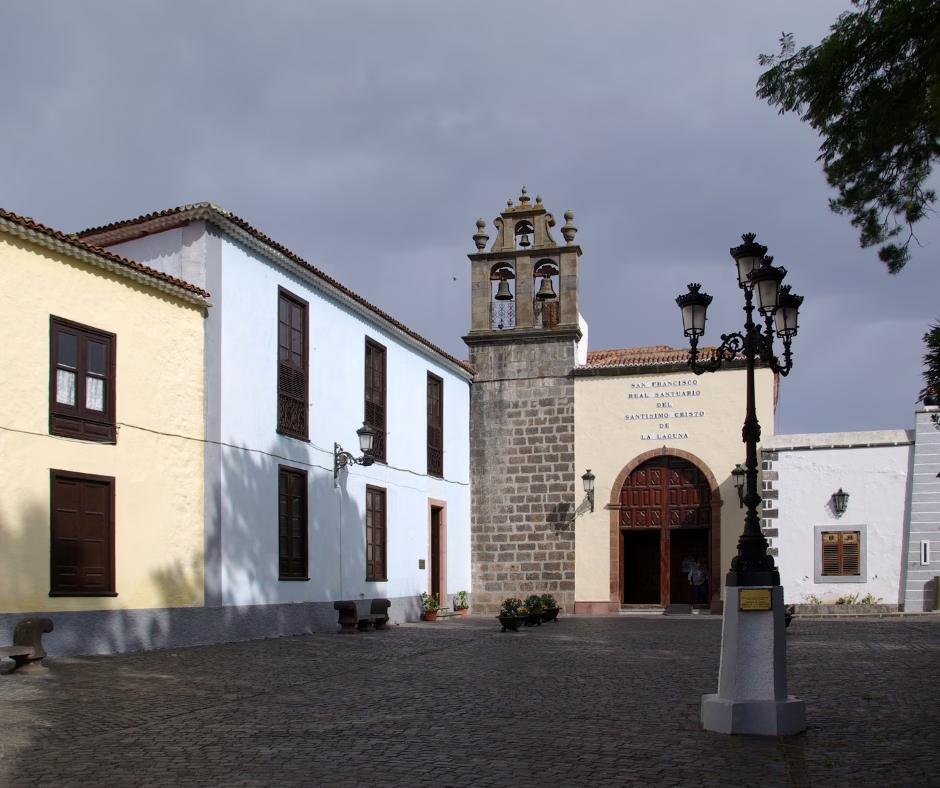
At Plaza del Cristo de La Laguna, the Pope praised humanitarian organizations and warned against those who exploit migrants’ desperation (7, 8, 9). But the most powerful voices were those of the immigrants themselves (10, 11).
They spoke of the practical tools needed for integration:
- learning the local language
- recognizing transferable skills
- accessing vocational training
- meaningful employment
In Perpetuum Mobile, Chapter I notes that immigrants face “language barriers, isolation, and difficulties in adaptation” (Perpetuum Mobile, Ch. I, p. 11). Chapter III expands this, describing how logotherapy helps restore self-worth, uniqueness, and irreplaceability through meaning-oriented techniques such as Modification of Attitudes and De-reflection (Perpetuum Mobile, Ch. III, pp. 22–23).
From a logotherapeutic perspective, work and contribution are primary avenues through which human beings discover meaning (3). Integration is not passive survival—it is active participation. And participation requires community support, a theme central to Chapter VIII, Personality and Culture, where we wrote:
“The relationship between the individual and the community is essential in the search for meaning.” (Perpetuum Mobile, Ch. VIII)
3. Holy Mass at the Port of Santa Cruz: A Harbor Transformed
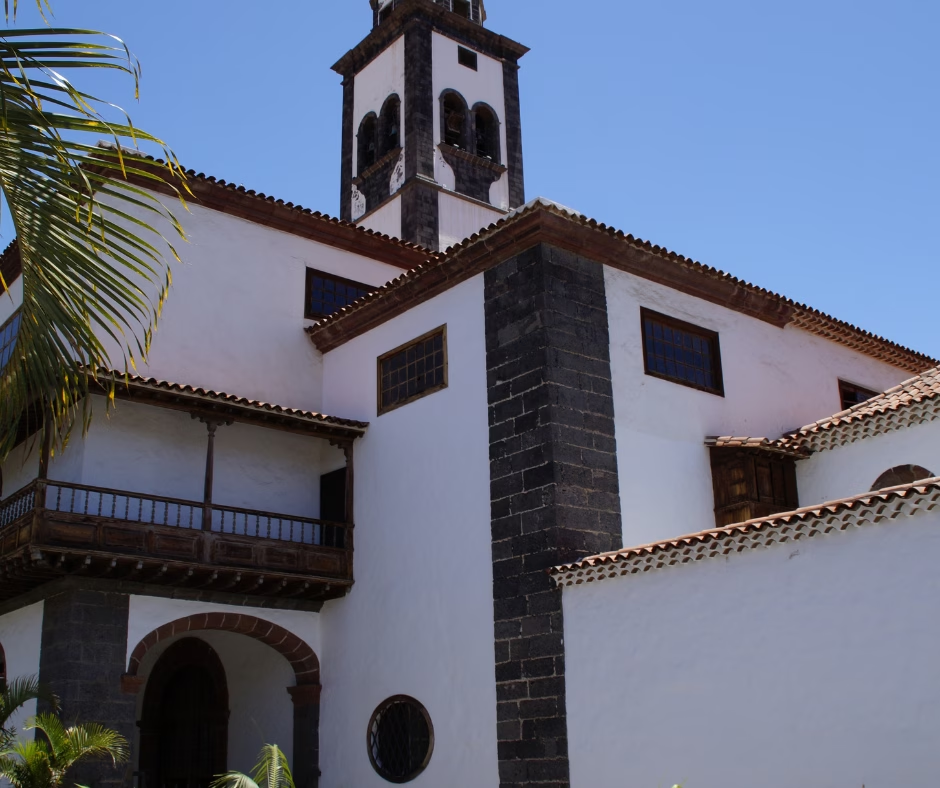
The day culminated with an extraordinary Mass at the Port of Santa Cruz de Tenerife, near La Iglesia de La Concepción (5, 10). Once a site of military defense, the port became a sanctuary of peace, solidarity, and prayer.
This transformation mirrors the book’s existential metaphor: movement from protection to openness, from survival to encountering meaning. In Chapter IX, we describe Perpetuum Mobile as the ongoing search for meaning that “shines into our world through everyday events, people, and circumstances” (Perpetuum Mobile, Ch. IX).
The port became precisely such a circumstance—a symbol of what integration truly requires: a community willing to turn fortresses into harbors.
Insights from the Papal Visit: Community as the Vessel of Meaning
Pope Leo XIV’s visit to Tenerife offered more than pastoral gestures; it provided a living illustration of the existential truths we explored in Perpetuum Mobile. His encounters with migrants, humanitarian workers, and local communities revealed that the journey of immigration is not only a geographical passage but a spiritual and communal movement toward meaning.
At Las Raíces, the Pope affirmed the sacredness of roots (4), echoing our book’s insight that identity is the anchor of the human spirit during transitions. In Perpetuum Mobile, we wrote that modern migration often occurs “with limited support,” leaving individuals vulnerable to isolation and existential vacuum (Perpetuum Mobile, Ch. I, pp. 11–12). The Pope’s words directly addressed this vulnerability: dignity is preserved when a person’s origin story is honoured.
At Plaza del Cristo de La Laguna, the Pope highlighted the indispensable role of community support (8, 9). This mirrors Chapter III of our book, where we describe how immigrants must rebuild self-worth, purpose, and direction through meaningful engagement with their new environment (Perpetuum Mobile, Ch. III, pp. 22–23). The testimonies of migrants—speaking of language, skills, and work—were not merely practical concerns; they were expressions of the human search for meaning through contribution, a core tenet of Frankl’s logotherapy (3).
Finally, at the Port of Santa Cruz, the transformation of a historic fortress into a harbor of welcome (5, 12) symbolized the existential movement from fear to openness. In Perpetuum Mobile, we describe meaning as something that “shines into our world through everyday events, people, and circumstances” (Perpetuum Mobile, Ch. IX). The Mass at the port became precisely such a circumstance: a communal act of solidarity that revealed meaning through relationship.
The Papal visit made visible a truth that lies at the heart of both logotherapy and the immigrant experience: integration is not achieved by individuals alone, but through communities that choose to accompany the pilgrim.
Migration is Perpetuum Mobile — a continuous movement of the human person. Community is the vessel that gives that movement direction. Meaning is the horizon toward which both migrant and host society walk together.
This is the enduring insight I carried back to Ottawa: that the dignity of migrants is safeguarded not only by policies or programs, but by communities willing to transform fortresses into harbors, and strangers into neighbours.
References
- Vatican News. (2026, June 12). Pope Leo XIV arrives in Tenerife on apostolic journey focusing on migrant dignity. https://www.vaticannews.va/en/pope/news/2026-06/pope-leo-xiv-arrives-in-tenerife.html
- Marshall, M., & Marshall, E. (2014). Perpetuum mobile: A personal global concern. Ottawa Institute of Logotherapy.
- Frankl, V. E. (2014). Man’s search for meaning. Beacon Press
- Leo XIV. (2026, June 12). Address of the Holy Father to the immigrants at Centro de Las Raíces (Tenerife). Holy See. https://www.vatican.va/content/leo-xiv/en/speeches/2026/giugno/documents/20260612-spagna-migranti.html
- Leo XIV. (2026, June 12). Homily of the Holy Father at the Mass at the Port of Santa Cruz de Tenerife. Holy See. https://www.vatican.va/content/leo-xiv/en/homilies/2026/documents/20260612-spagna-messa-tenerife.html
- Diocese of Tenerife. (2019). Bicentenario de la Diócesis de San Cristóbal de La Laguna (1819–2019). Obispado de Tenerife. https://nivariensedigital.es/18254-2/
- Leo XIV. (2026, June 12). Address of the Holy Father to organizations working for the integration of migrants at Plaza del Cristo de La Laguna. Holy See. https://www.vatican.va/content/leo-xiv/en/speeches/2026/giugno/documents/20260612-spagna-migranti-integrazione.html
- Vatican News. (2026, June 12). Pope Leo XIV appeals against human trafficking in Tenerife. https://www.vaticannews.va/en/pope/news/2026-06/pope-leo-appeal-human-traffickers-tenerife-spain-migrants.html
- Vatican News. (2026, June 12). ACCEM migrant facility director Navarro speaks on Pope’s visit. https://www.vaticannews.va/en/church/news/2026-06/pope-leo-tenerife-accem-migrant-facility-director-navarro.html
- Vatican News. (2026, June 12). Pope Leo XIV meets migrant workers in Tenerife. https://www.vaticannews.va/en/pope/news/2026-06/pope-leo-discourse-migrant-workers-tenerife-spain.html
- Vatican News. (2026, June 12). Pope Leo XIV meets with migrants at Las Raíces Center in Tenerife. https://www.vaticannews.va/en/pope/news/2026-06/pope-leo-xiv-meets-with-migrants-at-las-raices-center-tenerife.html
- Vatican News. (2026, June 12). Pope Leo XIV: Christ opens an ocean of love at Tenerife Mass. https://www.vaticannews.va/en/pope/news/2026-06/pope-mass-tenerife-open-christs-ocean-of-love-migrants.html