

Viktor E. Frankl, 1950, quintessential book for understanding what Frankl meant by finding meaning in suffering.
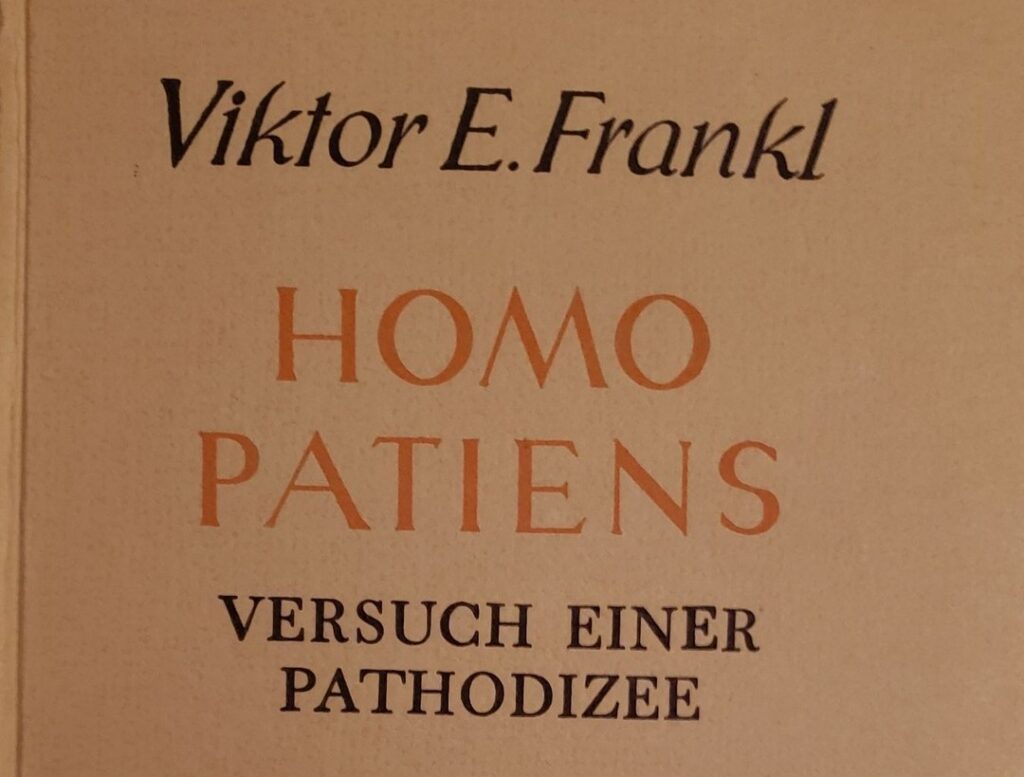
Translated excerpt from the 1950 edition of Homo Patiens [The Suffering Human Being]. Pages 114-115. Re-printed in 1996 under the title “Der leidende Mensch,” [The Suffering Human Being]. Pages 240-241, by Professor Maria Marshall, 2025.
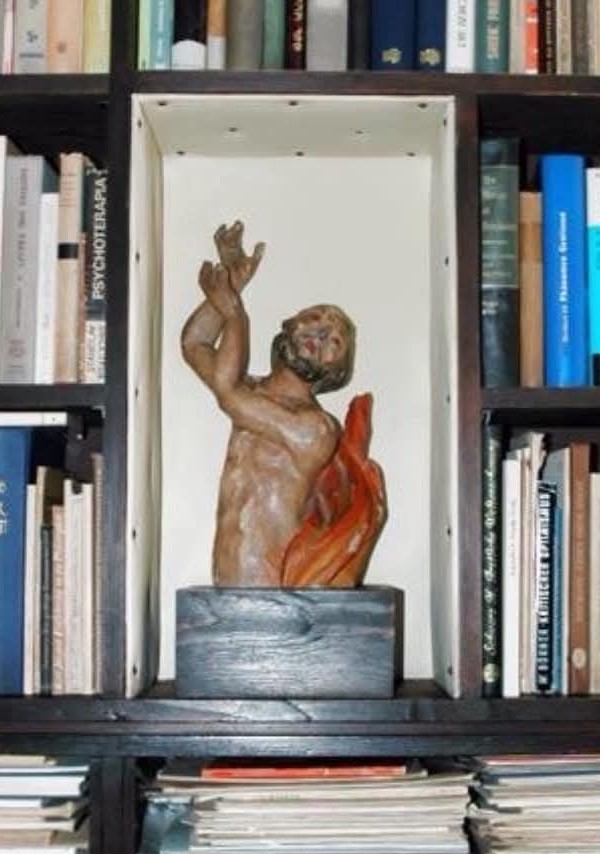
“We end the search for the metaclinical meaning of suffering with an open question. Every ending and everything final remains open. Not coincidental that the music in Gustav Mahler’s symphony, ‘The Song of the Earth’ ends with a responding tone, and the word ‘eternal’ will be sung: coincidentia oppositorum, the final harmony, the great consonance, which does not belong to us here on earth and it springs forth from the song ‘from the earth.’ So does the trust of the suffering human being is oriented toward transcendence while in the imnanence, it remains open.
But something firm is established and something can be concluded: that the question of meaning in suffering has to do with the question of meaning in life. In order to make this quest solvable, we have to resort to a ‘Kopernican revolution’ to the effect that we are the ones asked and not the ones asking the questions for life itself is a question–a question that we can answer only by being response-able.
And what we can say about meaning in suffering is the following–whoever maintains trust in the ultimate meaning, and questions the meaning of life, starts with the notion that suffering itself is a question, and that time and time again, we are the ones being questioned, as the Homo Patiens is questioned: he or she does not ask but he or she has to answer, he or she has to answer the question that suffering is, he or she has to stand the test–he or she has to endure the suffering.
And when we talk about the motto of Nietzsche and ask about the reason of suffering, we could say–the way one carries the suffering that is one’s fate–in this How of suffering–lies the answer of the reason of suffering. Everything depends on the attitude, the position that we take toward suffering–of course this applies only to unavoidable suffering which allows the actualization of attitudinal values.
The answer that the suffering human being gives through the how of suffering to the reason of suffering is certainly a wordless answer; but, again, through a belief in an ultimate meaning–is the only meaningful answer.
One word, not about suffering people, but suffering fellow human beings, those who suffer with others, equally meaningful as suffering is suffering with another human being–equally meaningful and equally wordless; for reassurance has limits–
Where every word would not be enough, every word is too much.”
Translator’s note: Unavoidable suffering belongs to human uniqueness as death belongs to life as meaning belongs to existence.